In this article
North Texas winters are usually mild. That’s exactly why they catch so many fleets off guard. When a hard freeze does roll in, trucks that never needed winter prep suddenly won’t start, fuel turns to gel and air lines freeze solid.
Many DFW fleets remember the February 2021 winter storm, when trucks across the region sat dead for days. You don’t need a storm that big to have problems. One night in the teens can be enough.
Here’s a practical winter checklist for diesel trucks in North Texas, built from the cold-weather calls our mechanics handle every year.
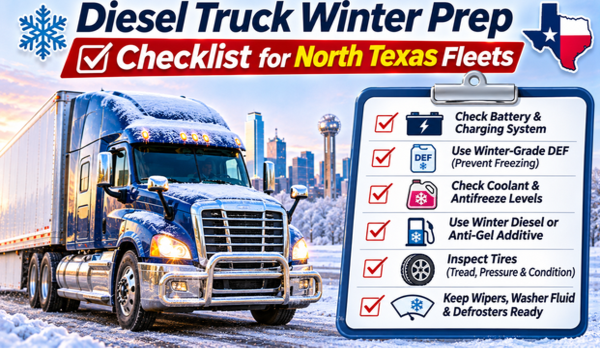
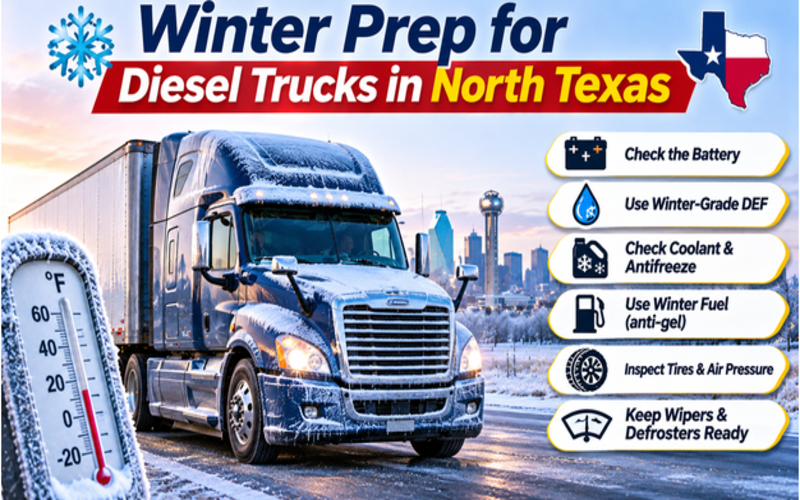
To prepare a diesel truck for a North Texas winter, test and replace weak batteries, use winter-blend diesel or an anti-gel additive, change fuel filters and drain water separators, check that the DEF heater works, service the air dryer and drain air tanks, test coolant freeze protection, check block and grid heaters, and keep tires properly inflated. Drivers should also carry a basic cold-weather kit.
Why Cold Weather Hits Diesel Trucks Hard
- Diesel fuel can gel when temperatures drop low enough, clogging filters and lines.
- Batteries lose capacity in the cold, while diesel engines need strong cranking power.
- Moisture in air systems freezes, blocking lines and valves.
- DEF freezes at about 12°F, so the heater system has to work.
- Cold oil is thicker, making engines harder to turn over.
The North Texas Winter Checklist
1. Test Every Battery
Weak batteries that get by in summer often fail on the first cold morning. Have each battery load-tested, not just checked for voltage. Clean terminals and tighten cables.
2. Protect Your Fuel From Gelling
Fuel suppliers in North Texas don’t always switch to winter blends early. Before a cold front:
- Ask your supplier whether you’re getting a winter blend.
- Use an anti-gel additive as directed, added before fueling so it mixes properly.
- Keep tanks fuller to reduce condensation.
Anti-gel additives work to prevent gelling. Once fuel has already gelled, you’ll need a different treatment and often new filters.
3. Change Fuel Filters and Drain Water
Water in diesel can freeze and block flow. Drain the water separator and replace fuel filters before winter, especially if they’re close to their service interval.
4. Check the DEF System
Your DEF tank and lines have heaters that thaw and protect the fluid. If a heater fails, you may get a warning or derate in cold weather. Have the DEF heater and related sensors checked, and use fresh DEF.
5. Service the Air Dryer and Drain Tanks
Moisture in the air system is one of the biggest winter problems. Replace the air dryer cartridge if it’s due, drain tanks regularly and check that automatic drain valves work. Frozen air lines can keep brakes from releasing or applying properly.
6. Test Coolant Protection
Use a refractometer or test strips to check that coolant protects to the right temperature. Look for leaks and soft or cracked hoses, since cold can make weak hoses fail.
7. Check Block Heaters and Grid Heaters
A block heater keeps the engine warm overnight, and a grid or intake heater helps on startup. Test both before you need them. Check cords for damage.
8. Inspect Tires
Tire pressure drops as temperatures fall. Check pressure on cold mornings and adjust. Look for worn tires that could struggle on ice.
9. Check Wipers, Washer Fluid and Lights
Use winter washer fluid that won’t freeze. Replace worn wipers and make sure every light works, since winter days are shorter.
10. Don’t Forget the Trailer
Check trailer air lines, gladhands, brakes and lights. Reefer units also need fuel and attention before a freeze.
Driver Cold-Weather Kit
Every cab should have:
- Warm clothes, gloves and a blanket
- Water and snacks
- Flashlight and extra batteries
- Phone charger
- Extra anti-gel additive and a spare fuel filter
- Reflective triangles and a hi-vis vest
- Ice scraper
What to Do If Your Truck Won’t Start in the Cold
- Don’t crank nonstop. Crank in short bursts to protect the starter.
- Check for gelled fuel, which often shows up as a cloudy or waxy look in the filter bowl.
- Don’t use starting fluid on engines with a grid heater or glow plugs.
- Check batteries and connections.
- Call a mobile mechanic if it still won’t start.
Our emergency roadside repair team handles gelled fuel, dead batteries and frozen air lines across DFW.
Plan Fleet Winter Prep Now
The best time to winterize is before the first hard freeze, not during it. When a storm hits, every mechanic in DFW gets busy at once.
Our fleet maintenance programs can include winter checks for every truck, done on-site at your yard so trucks stay in service.
Mobile Diesel Truck Repair Across DFW
Mobile Diesel Truck Repair brings certified diesel truck mechanics to you for semi truck repair, 18-wheeler repair and trailer repair across Dallas, Plano, Carrollton, Denton, Grand Prairie and Wylie.
Call (972) 433-9450 or contact us to schedule winter prep.
Frequently Asked Questions
At what temperature does diesel fuel gel?
It depends on the fuel blend. Summer diesel can start to cloud and gel at higher temperatures than winter blends. Ask your supplier and use an anti-gel additive before a cold front.
How do I keep my diesel truck from gelling?
Use winter-blend fuel or an anti-gel additive added before fueling, keep tanks fuller and change fuel filters before winter.
Does DEF freeze?
Yes, at about 12°F. Trucks have heaters to thaw it, so make sure the DEF heater is working.
Why do air brakes freeze in winter?
Moisture in the air system can freeze in lines and valves. Service the air dryer and drain tanks regularly.
Do diesel trucks need winter prep in Texas?
Yes. North Texas freezes are less frequent but can still gel fuel, kill batteries and freeze air lines.