In this article
Every fleet manager knows the math. A planned PM takes a few hours. A roadside breakdown can cost a day or more, plus a tow, a missed load and an unhappy customer.
A good preventive maintenance schedule catches problems while they’re still small, cheap and easy to plan around. But many fleets either don’t have a clear schedule or follow one that doesn’t match how their trucks actually run.
Here’s a practical guide to building a semi truck PM schedule, including what goes into A, B and C services and how to set the right intervals for your fleet.
A semi truck preventive maintenance schedule usually has three levels. PM A is a basic service with oil and filter changes, lubrication and a safety inspection. PM B adds more detailed checks of brakes, suspension, fuel and cooling systems. PM C is the most complete, often done yearly with the DOT annual inspection, fluid services and major component checks. Intervals should be based on the engine maker’s recommendations and adjusted for miles, engine hours and duty cycle.
Why a PM Schedule Matters
- Fewer roadside breakdowns and tows
- Lower repair costs, since small fixes don’t grow into big ones
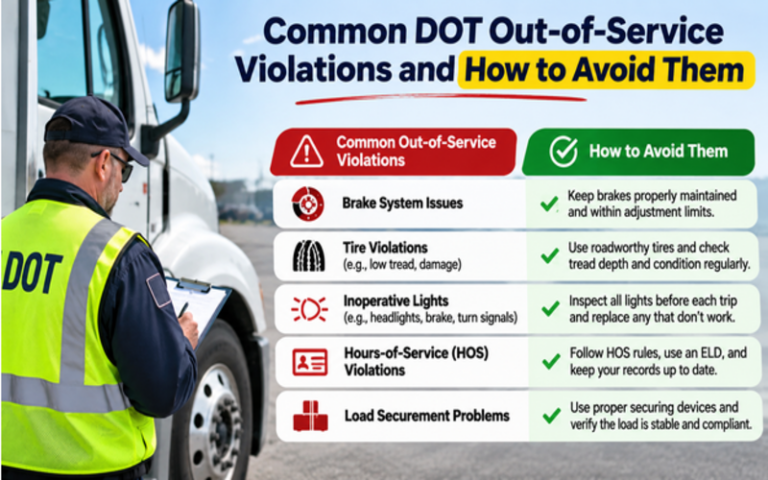
- Better safety and fewer out-of-service violations
- Longer truck life and better resale value
- Easier compliance with DOT inspection and recordkeeping rules
The Three PM Levels
Shops and fleets use slightly different definitions, but most follow this general structure:
| PM level | Typical frequency | What it focuses on |
|---|---|---|
| Daily | Every trip | Driver pre-trip and post-trip inspection |
| PM A | Most frequent shop service | Oil and filters, lubrication, basic safety inspection |
| PM B | Every second or third PM A, or by schedule | PM A plus deeper brake, suspension, fuel and cooling checks |
| PM C | Usually yearly | PM B plus DOT annual inspection, major fluid services and component checks |
What’s Included in Each PM
Daily: Driver Inspection
Drivers are the first line of defense. A thorough pre-trip and post-trip covers tires, lights, brakes, air system, fluid levels, coupling and visible leaks. Problems should be reported right away, not saved for the next PM.
PM A: Basic Service
- Engine oil and filter change
- Fuel filter checks or changes as scheduled
- Chassis lubrication
- Fluid level checks: coolant, power steering, transmission, DEF
- Belt and hose inspection
- Tire pressure and tread check
- Brake adjustment and visual brake check
- Light check
- Fault code scan
PM B: Detailed Service
Everything in PM A, plus:
- Brake measurements and chamber checks
- Air system leak-down and build-up tests
- Suspension and steering inspection
- Cooling system pressure test
- Fuel system inspection
- Air filter restriction check
- Battery and charging system test
- Exhaust and aftertreatment check
PM C: Annual Service
Everything in PM B, plus:
- DOT annual inspection
- Transmission and differential fluid service as scheduled
- Coolant test or replacement as needed
- Air dryer cartridge replacement
- Valve adjustment when due
- Detailed frame, coupling and wheel-end inspection
- DPF cleaning when due
How to Set the Right Intervals
There’s no single interval that fits every fleet. Start with the engine and truck maker’s recommendations, then adjust for how your trucks are used.
Mileage. Long-haul trucks pile up miles quickly and may follow mileage-based intervals.
Engine hours. Trucks that idle a lot or run short routes may need hour-based intervals, since idle time wears the engine without adding miles.
Duty cycle. Heavy loads, stop-and-go city driving, construction work and extreme heat count as severe service and usually need shorter intervals.
Oil analysis. Regular oil samples can show whether intervals can safely be extended or need to be shortened.
North Texas summers count. High heat is hard on cooling systems, batteries and tires, so many DFW fleets tighten checks on those systems in summer and before winter.
Don’t Forget Trailers
Trailers need their own PM schedule. Focus on brakes, tires, wheel ends, lights, suspension, landing gear and doors. Reefer units need separate service based on hours.
DOT Requirements to Know
Federal rules require commercial motor vehicles to be systematically inspected, repaired and maintained, with records kept. Each vehicle must also pass a periodic DOT inspection at least once every 12 months. A good PM program makes compliance much easier.
Tracking Your PM Schedule
- Use fleet maintenance software or a simple spreadsheet
- Track mileage, engine hours and dates for every unit
- Set reminders before each PM is due
- Keep records of every service and repair
- Look for repeat problems across trucks
Mobile PM: Service Without Downtime
Taking trucks off the road for PM costs time. A mobile maintenance team can perform many A and B services, and parts of C services, right at your yard, so trucks are serviced overnight or between routes.
Fleet Maintenance Across DFW
Mobile Diesel Truck Repair builds fleet maintenance programs around your routes, with on-site oil changes, inspections, brake service and diagnostics. Our certified diesel truck mechanics handle semi trucks, 18-wheelers, trailers and tire service, with emergency roadside repair when you need it.
We serve Dallas, Grand Prairie, Carrollton, Plano, Denton and Wylie. Call (972) 433-9450 or contact us to set up a PM plan.
Frequently Asked Questions
What is a PM schedule for semi trucks?
A plan for regular maintenance at set intervals, usually split into PM A, B and C levels, to prevent breakdowns.
What’s the difference between PM A, B and C?
PM A is a basic service, PM B adds detailed system checks, and PM C is the most complete, often including the DOT annual inspection.
How often should a semi truck get an oil change?
It depends on the engine, oil type and duty cycle. Follow the engine maker’s recommendation and consider oil analysis.
Does DOT require preventive maintenance?
Yes. Commercial vehicles must be systematically inspected and maintained, with records kept, and pass an annual inspection.
Can preventive maintenance be done at our yard?
Yes. Mobile mechanics can perform many PM services on-site, reducing downtime.