In this article
Few things stop a load faster than an out-of-service order. One roadside inspection, one serious defect, and your truck is parked until it’s fixed. That means a missed delivery, a repair on the side of the road and a mark on your safety record.
The frustrating part is that many out-of-service violations come from problems that could have been caught during a pre-trip or routine maintenance. Here’s what inspectors look for, the violations that come up most often and how to keep your trucks rolling.
Quick answer: The most common vehicle out-of-service violations involve brakes (out of adjustment, air leaks, damaged components), tires (low tread, flats, sidewall damage), lights (inoperable brake lights, turn signals or required lamps) and cargo securement. Driver violations often involve hours of service and missing documents. Thorough pre-trips, scheduled PM and fixing defects right away prevent most of them.
What Does “Out of Service” Mean?
An out-of-service (OOS) order means a vehicle or driver can’t legally continue until the problem is fixed. Inspectors use the North American Standard Out-of-Service Criteria, published by the Commercial Vehicle Safety Alliance (CVSA), to decide which defects are serious enough.
Not every violation puts a truck out of service. Some are written up as violations you need to correct later. OOS violations are the ones considered an immediate safety risk.
OOS orders can also affect your carrier’s safety scores, which shippers, brokers and insurers may review.
The Most Common Vehicle OOS Violations
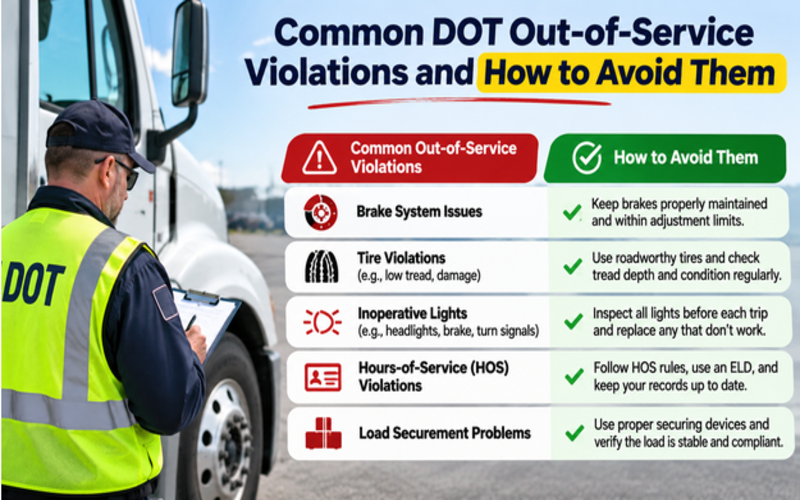
1. Brake Problems
Brakes are consistently one of the most common reasons trucks are placed out of service. Common issues include:
- Brakes out of adjustment
- Air leaks
- Cracked or worn drums and linings
- Damaged or leaking brake chambers
- Chafed or kinked air lines
- Inoperative ABS warning lamps
How to prevent it: Check brake adjustment and listen for leaks during pre-trips. Have brakes inspected at every PM. If an automatic slack adjuster keeps going out of adjustment, replace it rather than adjusting it by hand.
2. Tire Problems
- Tread below 4/32 inch on steer tires or 2/32 inch on other tires
- Flat tires or audible air leaks
- Sidewall cuts, bulges or exposed cords
- Tires touching other parts of the truck
How to prevent it: Check pressure with a gauge, look for damage and measure tread regularly. Our tire service can replace tires on-site.
3. Lighting Defects
Lighting problems are among the easiest violations to prevent and one of the most common. Inspectors check:
- Brake lights
- Turn signals
- Headlights and tail lights
- Clearance and marker lights
- Trailer lights and wiring
How to prevent it: Walk around the truck with lights on during every pre-trip. Keep spare bulbs and fuses in the cab. Fix corroded connectors before they fail.
4. Cargo Securement
Loose, damaged or missing tie-downs and improperly secured loads can lead to OOS orders. Check straps, chains and binders for wear, and make sure you’re using enough tie-downs for the load.
5. Other Common Defects
- Steering components with excessive play
- Suspension parts that are cracked, broken or missing
- Fuel or exhaust leaks
- Coupling problems at the fifth wheel or kingpin
- Damaged frames
Common Driver OOS Violations
Inspectors also check the driver. Common driver-related violations include:
- Hours-of-service violations
- Missing or invalid licenses or medical certificates
- Missing required documents
- ELD problems
Keep paperwork organized and up to date, and make sure drivers know how to show ELD records during an inspection.
How to Prepare for Roadside Inspections
- Do a real pre-trip. Not a quick glance. Check brakes, tires, lights, coupling and leaks.
- Fix defects right away. Don’t leave on a trip with a known problem.
- Keep PM on schedule. Our fleet maintenance programs include brake, light and tire checks.
- Keep records. Maintenance records show you take safety seriously.
- Train drivers. Make sure they know what inspectors look for.
- Watch for enforcement events. CVSA holds inspection blitzes and focus weeks throughout the year, often centered on brakes or specific safety issues.
What to Do If You Get an OOS Order
- Stay calm and get a copy of the inspection report.
- Notify your dispatcher or safety department.
- Get the defect repaired before moving the truck, unless the inspector allows otherwise.
- Keep repair records and receipts.
Many OOS defects, like brake adjustments, air leaks, lights and tires, can be repaired on-site by a mobile diesel mechanic, so the truck can get moving again without a tow.
Don’t Forget the Annual Inspection
Commercial vehicles must also pass a periodic DOT inspection at least every 12 months. Keeping trucks in shape year-round makes the annual inspection and roadside inspections much easier to pass.
On-Site Repairs for DOT Defects Across DFW
Mobile Diesel Truck Repair helps fleets and owner-operators fix inspection defects fast with on-site semi truck repair, 18-wheeler repair, trailer repair and emergency roadside repair. We serve Dallas, Grand Prairie, Carrollton, Plano, Denton and Wylie.
Call (972) 433-9450 or contact us.
Frequently Asked Questions
What is the most common DOT out-of-service violation?
Brake problems are consistently among the most common vehicle OOS violations, along with tires and lights.
What happens if my truck is placed out of service?
It can’t legally move until the defect is repaired, unless the inspector allows otherwise. The violation may also affect safety scores.
Who sets the out-of-service criteria?
The Commercial Vehicle Safety Alliance publishes the North American Standard Out-of-Service Criteria.
How can I avoid out-of-service violations?
Do thorough pre-trips, keep PM on schedule, fix defects right away and keep records organized.
Can OOS defects be fixed roadside?
Many can, including brake adjustments, air leaks, lights and tires.